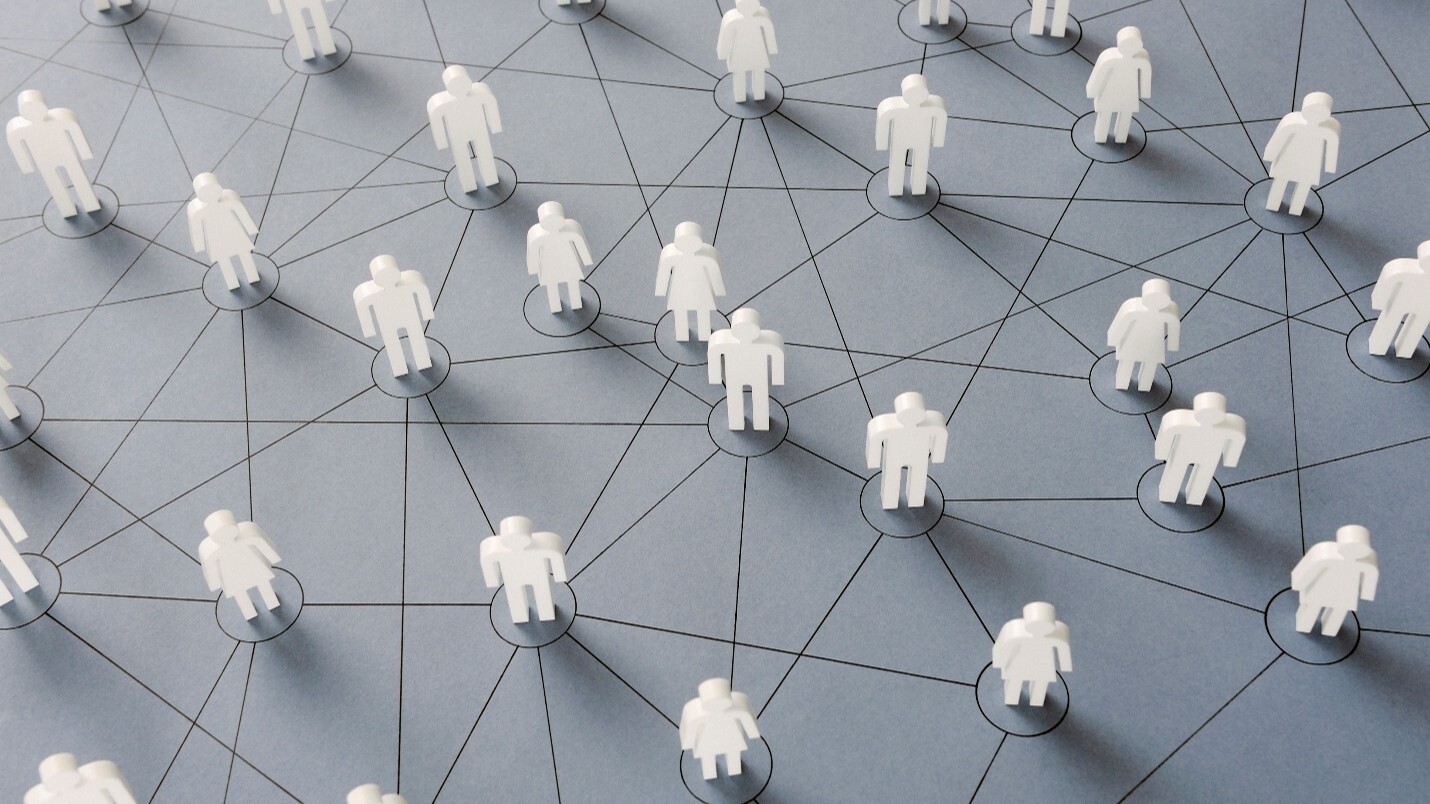
A supply chain is a network of independent businesses. Every carrier, supplier, customer, and platform on it makes its own technology choices, and your systems must work with all of them. Left alone, that network turns into chaos: a growing number of one-off connections that only a few people understand. With the right EDI software and integration approach, the same network can become a connected ecosystem. The difference is not how many partners you have. It is how you manage them.
Stage one: chaos
At this stage, every partner relationship is its own project. Connections are built point to point, often by different people, often with their own logic. Documentation is thin and knowledge lives in people's heads. A partner changes a specification and someone scrambles. A message fails and the first signal is a phone call.
Chaos is not a sign of a bad team. It is what you get when growth outpaces structure. Most organizations pass through it, and many stay longer than they intend.
Stage two: controlled
The first step up is control. Flows are standardized where possible, ownership is clear, and monitoring tells the team what is running and what is not. Mappings are documented. Exceptions are visible when they occur instead of being discovered later.
Control does not require replacing systems. It requires a single place where data flows are defined and watched, so the organization can answer basic questions: what is connected, who owns it and what is failing right now.
Stage three: connected
In supply chain terms, a connected ecosystem is a network of partners and systems whose data exchanges are standardized, monitored and repeatable, so new partners can be added and changes made without disrupting existing flows. That is control plus repeatability. New partners are onboarded from reusable patterns instead of from scratch. Data arrives in a shared, consistent form regardless of how each partner sends it. Teams close to the business can make changes themselves, and the integration layer becomes a capability the organization owns instead of a backlog it manages.
At this stage the network starts to work in your favor. Adding a partner is routine. Changing a format is a small task. Data from many sources can be used together, which is the foundation for analytics and for AI.
What moves an organization up a stage with EDI software and integration
- One layer for every format. Manage EDI, APIs, flat files, and partner-specific formats in one environment instead of one tool per format.
- Ownership by the business. Let the team that understands the partner builds and change the flow, using visual, low-code tools, so integration is not gated by developer capacity.
- Visibility by default. Monitor every flow in one place, with alerts that identify the document, the partner, and the reason.
- Reuse over rebuild. Treat each partner as a variation on a pattern, not a new project.
- A shared meaning for data. Agree with what fields and statuses mean across partners so the data can be trusted when it is combined.
- Faster growth of the network. New carriers, suppliers, and customers join without the project overhead that used to slow every addition.
- Earlier warning. Because every flow is monitored in one place, problems show up when they occur and not after a customer calls.
- Better decisions. Data from many partners can be combined, which supports planning, analytics and AI that would be unreliable on inconsistent inputs.
- Less dependence on individuals. Flows are documented in the platform, not in someone's memory, so the organization is resilient when people move on.
How long it takes to move from chaos to control depends on the size of the estate, but progress is made flow by flow. Starting with an inventory and the most painful flows deliver value before the whole environment is addressed.
Where Bosch Mobility Platform & Solutions fits
Bosch Mobility Platform & Solutions works with logistics, supply chain, and manufacturing organizations on exactly this progression. Lobster, a data integration platform delivered within the Bosch Logistics Operating System, connects partners, systems, and formats in one place and lets operations teams build and change flows themselves. It is designed to work alongside the technology you already run, not to replace it. Most organizations do not need to replace their existing EDI software to get there. They place a shared integration layer in front of existing systems and move flows over gradually.
Finding your own stage
A quick way to place your organization: pick a partner you onboarded recently and ask how long it took, who did the work, whether anyone else could repeat it, and how you would know if it stopped working tomorrow. Honest answers to those four questions show which stage you are in and what to fix next.
What a connected ecosystem makes possible
The point of moving up the stages is not tidiness. It is what the organization can do once adding partners is routine and data arrives in a form you can trust.
Common mistakes on the way up
Three patterns slow progress. The first is trying to jump from chaos to connected in one program, which usually becomes a big bang rebuild. The second is standardizing partner formats by decree, which partners rarely follow. The third is treating the integration layer as a project with an end date instead of a capability with an owner. Staged progress, partner variation as a given, and a named owner avoid all three.